
National Nutrition Agency Head Sudaryono Evaluates MBG Kitchen in Karo, Plans to Adopt Police Chemical Testing
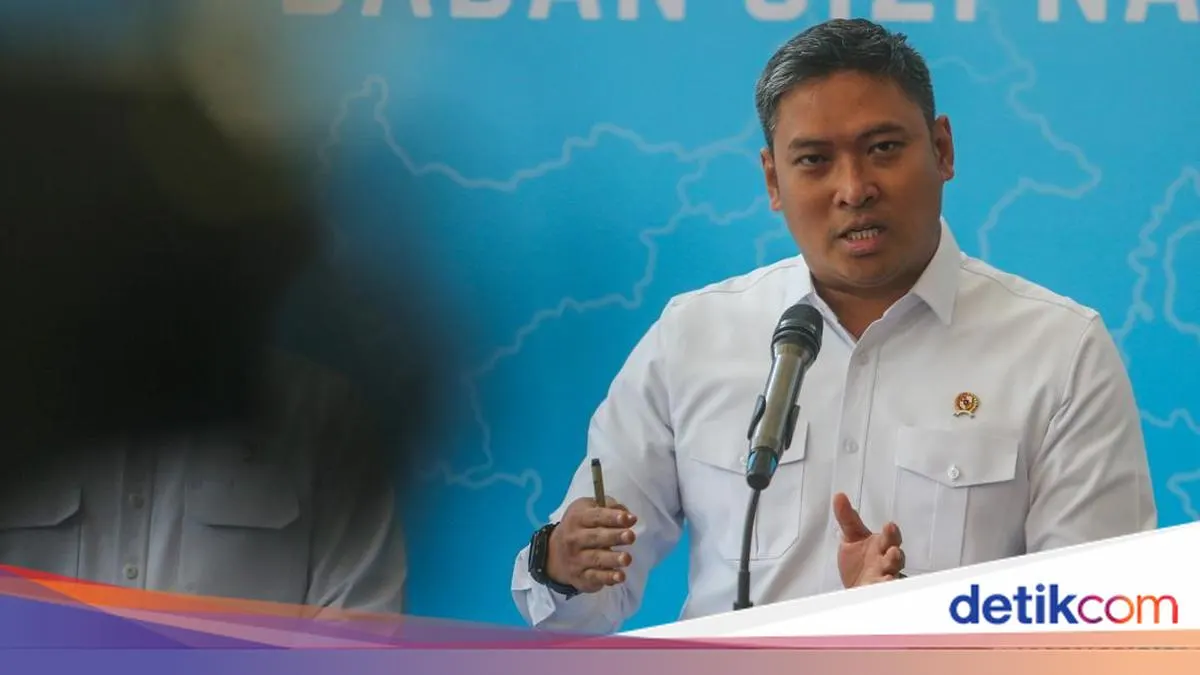
The National Nutrition Agency (BGN) is evaluating the Nutrition Fulfillment Service Unit (SPPG) in Berastagi, Karo Regency, North Sumatra, following a mass poisoning incident that affected hundreds of students. BGN Head Sudaryono stated that his agency will adopt chemical testing methods from the National Police to prevent similar incidents and has closed 1,300 SPPGs.
Head of the National Nutrition Agency (BGN) Sudaryono stated that an evaluation of the Nutrition Fulfillment Service Unit (SPPG) in Berastagi, Karo Regency, North Sumatra, followed the poisoning of hundreds of students due to the Free Nutritious Meal (MBG) menu.
Sudaryono said the BGN will conduct chemical tests on MBG food at each SPPG. This step is taken because organoleptic examinations such as smell, taste, or tasting did not show any problems before the food was consumed.
"Yes, yes (evaluation). So this poisoning is not just, for example, checked organoleptically by smell, taste, or tasting, right. From the smell there was no problem, tasting also had no problem, finally it was consumed," said Sudaryono at the Merdeka Palace, Jakarta, Monday (17/8/2026).
Adoption of the National Police's Chemical Test Method
The BGN is considering adopting the chemical test method from SPPGs managed by the National Police. This method uses test kits to check for the presence of arsenic, spoilage, or other hazardous substances in food.
"So we are considering this so that later in every kitchen we will conduct test kits. So it will be tested, given chemicals to check if there is arsenic, spoilage, or other hazardous substances," said Sudaryono.
According to Sudaryono, the success of the National Police's SPPG using test kits has prevented poisoning cases. He emphasized that the BGN does not want any more poisoning cases and aims for zero MBG poisoning cases.
"We learn from the success of SPPGs, some SPPGs - one of which is managed by Bhayangkari from the National Police - use test kits and so far there have been no poisoning cases. We don't want anyone to be poisoned again," he continued.
Closure of SPPG and Employee Sanctions
Sudaryono also revealed that the BGN has closed 1,300 SPPGs in the last three weeks. This closure is part of efforts to evaluate and improve standards.
He emphasized that SPPGs that cannot be improved or do not meet BGN's high standards will be closed. For personnel who are unable to follow the standards, Sudaryono threatened to remove or dismiss their ASN PPPK status.
"Out of 27 thousand kitchens, thank God most are working well and we must strive for the good ones to continue to improve. We are evaluating those that are not good. Those that cannot be evaluated, cannot be improved, I apologize, I have to close them. For personnel who cannot follow the high standards that I have, I apologize, I have to remove or dismiss their ASN PPPK status. That's about it," he said.
"I don't care whose SPPG it is, I don't look at that, I look at the system. If it doesn't meet the standards in my system, then with a heavy heart I have to close it permanently. That's about it," he added.
Criticism from PDIP Regarding MBG Supervision
Secretary General of the PDIP Central Executive Board, Hasto Kristiyanto, criticized the repeated food poisoning cases of the MBG program in North Sumatra. Hasto assessed this as a strong indication that the government's supervision system is not working well.
He also accused "rent-seekers" of lowering food quality for financial gain. The criticism was conveyed by Hasto after the commemoration ceremony for the 81st Anniversary of the Republic of Indonesia's Independence in the courtyard of the At-Taufiq Mosque, PDIP Party School, Lenteng Agung, South Jakarta, Monday (17/8/2026).
"This is an issue that has occurred from the beginning. When the issue repeats itself, it means the system is not working. Control is not working and then it also shows why the quality is not good? Because there are rent-seekers there," said Hasto.
Demand for Revision and Participatory Approach
Given the large number of student victims, Hasto urged the government to immediately revise and comprehensively evaluate the governance and distribution mechanisms of the MBG program. "This is what must be totally revised. A comprehensive evaluation must be carried out, there have been too many victims," he continued.
Hasto explained that PDIP has a proven concept for handling public nutrition through a participatory approach. He cited the success of nutrition fulfillment policies in Surabaya by Tri Rismaharini, in Bantul by Idham Samawi, and in Banyuwangi by Abdullah Azwar Anas.
"PDI Perjuangan has a concept on how to help the nutritional needs of the people. Participatory steps involve the people. So don't consider the nutritious food program as a top-down one," explained Hasto. He suggested that the central government should only act as a guarantor and quality supervisor, while the execution should be handed over to local communities and MSMEs.