Prabowo Subianto, Examining His Thought Process, Political Career, and Prospects on the National Stage
This article analyzes Prabowo Subianto's political journey, highlighting the influence of his father, Soemitro Djojohadikusumo's, thoughts in shaping his vision of economic nationalism and food sovereignty. It also discusses his strategic role as Minister of Defense and his prospects leading up to the 2024 Election.
Prabowo Subianto, a name no stranger to the Indonesian political scene, continues to be in the public spotlight and the subject of analysis by observers. From a high-ranking military officer to his current position as Minister of Defense, his political journey is full of dynamics, shifting alliances, and consistency on several fundamental principles.
A deep dive into his persona cannot be separated from his family background, especially the influence of his father, Prof. Dr. Soemitro Djojohadikusumo, the doyen of Indonesian economics.
From Military to Politics: The Transformation of Prabowo
Prabowo Subianto's military career has a long record, reaching its peak as Commander of Kopassus. However, in the late 1990s, he entered a new chapter that fundamentally changed the course of his life: the political arena. This transition was not without turmoil, marked by various speculations and challenges that shaped his character as a politician.
After the reform era, Prabowo founded the Great Indonesia Movement Party (Gerindra) in 2008. This move signaled his ambition to contribute directly to nation-building through legislative and executive channels. Gerindra, under his leadership, quickly established itself as a significant political force, attracting support from various segments of society yearning for firm and courageous leadership.
The party consistently promotes narratives of economic nationalism and food sovereignty, issues that have always been at the core of Prabowo's political platform. His political journey has since been marked by several presidential candidacies, an endeavor that demonstrates his persistence and strong determination.
Although he has not yet secured the presidency in previous elections, each contest has strengthened his position as one of the most influential political figures. He has successfully built a loyal support base that sees him as a figure capable of bringing significant change to Indonesia.
His participation in various general elections has made him a seasoned figure in understanding the dynamics of electoral politics. These experiences have shaped his strategies, both in building coalitions and in communicating directly with the people. His ability to adapt to the ever-changing political landscape while maintaining his political identity is one of the keys to his continued relevance on the national stage.
The Footprint of Soemitro Djojohadikusumo's Thoughts and Their Influence
To understand Prabowo Subianto, it is important to look back at his father, Soemitro Djojohadikusumo. Known as the architect of modern Indonesian economics, Soemitro's thoughts on self-reliant economic development, industrialization, and the importance of the state's role in regulating the market, have formed the foundation for many of the nation's economic policies. This influence is not merely academic but also permeates Prabowo's perspective on national issues.
Soemitro was a pragmatic intellectual, always emphasizing the importance of data and analysis in formulating policies. He was also known as a true nationalist who deeply cared about the nation's independence from foreign domination. These principles, often reiterated in Prabowo's speeches, indicate an ideological continuity between father and son.
For example, Prabowo's calls to strengthen the domestic agricultural and industrial sectors, as well as to protect Indonesia's natural wealth, are highly consistent with Soemitro's ideas. Soemitro's intellectual legacy is reflected not only in rhetoric but also in Prabowo's strategic approach to politics and defense.
The concept of "strategic autonomy," often championed by Prabowo in the context of defense, has strong roots in Soemitro's thoughts on economic sovereignty. Both viewed that a nation's strength is not only measured by its military aspect but also by its economic capacity to stand on its own feet.
The family's influence is also evident in the involvement of his brother, Hashim Djojohadikusumo, who recently inaugurated 20 new community organizations (Ormas) to oversee government programs. This indicates a structured and organized support network from Prabowo's inner circle, striving to strengthen the implementation of government policies and visions, in which Prabowo is now an integral part. This network serves as one of the important pillars of political and social support for Prabowo.
Prabowo in the Cabinet: Strategic Role and Political Adaptation
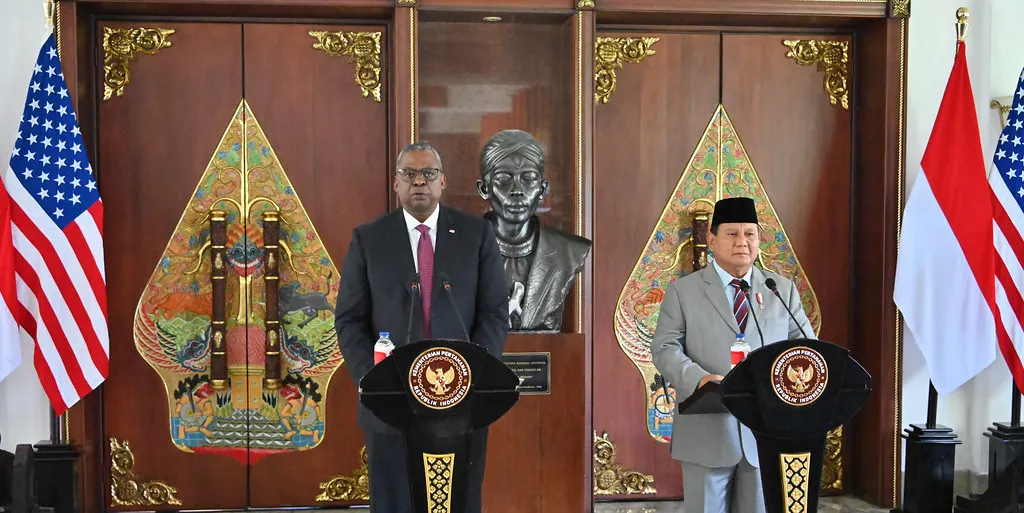
Prabowo Subianto's appointment as Minister of Defense under President Joko Widodo's administration in 2019 marked a new chapter in his political career. This decision, which surprised many given the fierce rivalry in the two previous presidential elections, demonstrated political maturity and the ability to prioritize national interests over personal or group differences. It was a significant step in political reconciliation.
As Minister of Defense, Prabowo has focused on modernizing primary defense equipment systems (Alutsista) and strengthening national defense capabilities. He actively engages in visits to various countries to forge defense cooperation, ensuring Indonesia has the capacity to protect its sovereignty and territorial integrity. This approach reflects his vision of a strong defense as a prerequisite for development and prosperity.
Some of the key initiatives he has taken include:
- Procurement of Alutsista: Efforts to acquire fighter jets, submarines, and air defense systems from various countries for diversification and capability enhancement.
- Strengthening Domestic Defense Industry: Promoting self-reliance through the development and production of Alutsista by the national defense industry, in line with the spirit of self-sufficiency.
- Defense Diplomacy: Active participation in regional and international forums to strengthen Indonesia's position on global and regional security issues.
Prabowo's role in the cabinet also demonstrates his ability to adapt to the existing governance system. From a vocal opposition figure, he transformed into an integral part of the executive, working alongside his former rival. This transformation is a testament to his political pragmatism, where the vision of national development and stability is the top priority. It also shows that Indonesian politics has room for reconciliation and cross-spectrum cooperation.
Challenges and Prospects Towards 2024
With the 2024 General Election drawing nearer, Prabowo Subianto's name is once again emerging as a potential candidate. Although he has not officially declared his candidacy, various surveys and political dynamics indicate that he still has a strong support base and electability that warrants consideration. His performance as Minister of Defense has provided him with a new platform to showcase his leadership and capabilities in managing strategic issues.
However, the road to 2024 is not smooth. Prabowo faces a number of challenges, including the need to rejuvenate his image, attract young voters, and build a solid and strategic coalition. Issues such as the economy, employment, and law enforcement will be of primary public concern, and how Prabowo can present concrete solutions to these problems will be crucial.
The following table illustrates some important indicators regarding Prabowo's political prospects:
On the other hand, the emergence of new figures and fluid coalition dynamics will also be determining factors. Prabowo's ability to embrace various societal elements and political figures will be key. He needs to demonstrate that he is not only capable of leading in the defense sector but also possesses a comprehensive vision for Indonesia's overall development.
Since the beginning of his political career, Prabowo Subianto has consistently championed the vision of economic nationalism and food sovereignty. This is not just a slogan but a reflection of deep thinking inherited from his father, Soemitro Djojohadikusumo, who always emphasized the importance of national economic independence. In Prabowo's view, a nation cannot be fully sovereign if it remains dependent on foreign entities for basic needs such as food and energy.
This vision is realized through several key points:
- Food Self-Sufficiency: Encouraging increased domestic agricultural production, reducing imports, and ensuring adequate food availability for all citizens. This involves significant investment in agricultural infrastructure, technology, and farmer welfare.
- Management of Natural Resources: Emphasizing the need for Indonesia to manage its natural wealth for the greatest prosperity of its people, not for the benefit of a few individuals or foreign companies. This means strengthening State-Owned Enterprises (BUMN) and implementing strict regulations on foreign investment.
- Strengthening National Industry: Promoting the growth of domestic industries to be competitive in the global market and create jobs. This includes incentives for strategic industries and protection for local products.
- Energy Independence: Developing renewable energy sources and optimizing domestic fossil fuel production to reduce reliance on imports.
Prabowo often presents data and facts about Indonesia's vast untapped potential. For instance, he frequently highlights fertile agricultural land that is not optimally utilized, or abundant marine wealth that is still largely exploited by foreign entities. This narrative aims to awaken collective awareness about the urgency of national self-reliance.
In an increasingly competitive and uncertain global context, the vision of economic nationalism and food sovereignty becomes even more relevant. Fluctuations in global commodity prices, geopolitical tensions, and the threat of food crises have demonstrated how crucial it is for every nation to have resilience in these vital sectors. Prabowo sees this not just as an economic issue but also as a fundamental national security concern.
The Gerindra Party, as Prabowo's main political vehicle, also continues to experience internal dynamics. Cadre loyalty to Prabowo as Chairman and Chairman of the Advisory Board is very high, reflecting strong and centralized leadership. However, like other political parties, Gerindra also faces challenges in leadership regeneration and adaptation to demographic shifts in the electorate.
At the coalition level, Gerindra's and Prabowo's positions are highly strategic. As part of the current government, Gerindra plays an important role in maintaining political stability and supporting government programs. However, leading up to 2024, the coalition map is predicted to be very fluid. Various political parties will begin exploring new possibilities to form the most advantageous alliances.
Factors that will influence coalition dynamics include:
- Electability of Potential Candidates: Parties will tend to form coalitions with candidates who have high electability to maximize their chances of winning.
- Alignment of Ideology and Programs: Although pragmatism often dominates, shared vision and mission remain a consideration.
- Political Strength of Coalition Parties: The distribution of power and strategic positions in the future government will be an important part of coalition negotiations.
Prabowo, with his long experience in coalition building, will undoubtedly play a key role in determining the direction of Gerindra and its potential coalition partners. His ability to communicate and negotiate with various other party leaders will be crucial in shaping the coalition formations. This is a process that requires keenness and mature strategy.
Prabowo Subianto is a complex figure who continues to evolve within the Indonesian political landscape. From the intellectual footprint of his father, Soemitro Djojohadikusumo, to his strategic role in the cabinet, each phase of his life journey shapes a unique political identity. With a consistent vision of economic nationalism and food sovereignty, and extensive experience in various arenas, he remains a force to be reckoned with on the national stage.
As 2024 approaches, how he navigates challenges and capitalizes on opportunities will determine whether he can reach the pinnacle of his political career, bringing his vision and experience to lead Indonesia in the future.
- Prabowo Subianto has a dynamic political journey, from the military to Minister of Defense, and founder of the Gerindra Party.
- His political thoughts and vision are greatly influenced by his father, Prof. Dr. Soemitro Djojohadikusumo, especially in economic nationalism and food sovereignty.
- As Minister of Defense, he focuses on modernizing Alutsista and defense diplomacy, demonstrating political adaptability.
- Leading up to the 2024 elections, Prabowo remains a central figure with high electability, but faces challenges in coalition building and attracting young voters.
- The vision of national self-reliance in food and economy is the main pillar of his political narrative, relevant to the current global situation.
Who is Prof. Dr. Soemitro Djojohadikusumo and what was his influence on Prabowo?
Soemitro Djojohadikusumo is Prabowo Subianto's father, a doyen of Indonesian economics. His thoughts on self-reliant economic development and nationalism greatly influenced Prabowo's vision, especially on issues of food sovereignty and economic independence.
What is Prabowo Subianto's current role in the government?
Prabowo Subianto currently serves as Minister of Defense under President Joko Widodo's administration since 2019, focusing on modernizing Alutsista and strengthening national defense capabilities.
Why is Prabowo Subianto considered an influential political figure leading up to the 2024 elections?
Prabowo has a strong support base, consistently high electability in various surveys, and extensive experience in politics and government, making him a potential candidate to be reckoned with.
What is Prabowo Subianto's main vision in his politics?
His main vision is economic nationalism and food sovereignty, which includes food self-sufficiency, management of natural resources for the people, strengthening national industry, and energy independence.
How did Prabowo adapt after becoming Minister of Defense from being in opposition previously?
Prabowo's adaptation demonstrates political maturity and pragmatism, prioritizing national interests over political rivalries. He works with his former rivals to strengthen national defense, a significant step in political reconciliation.